
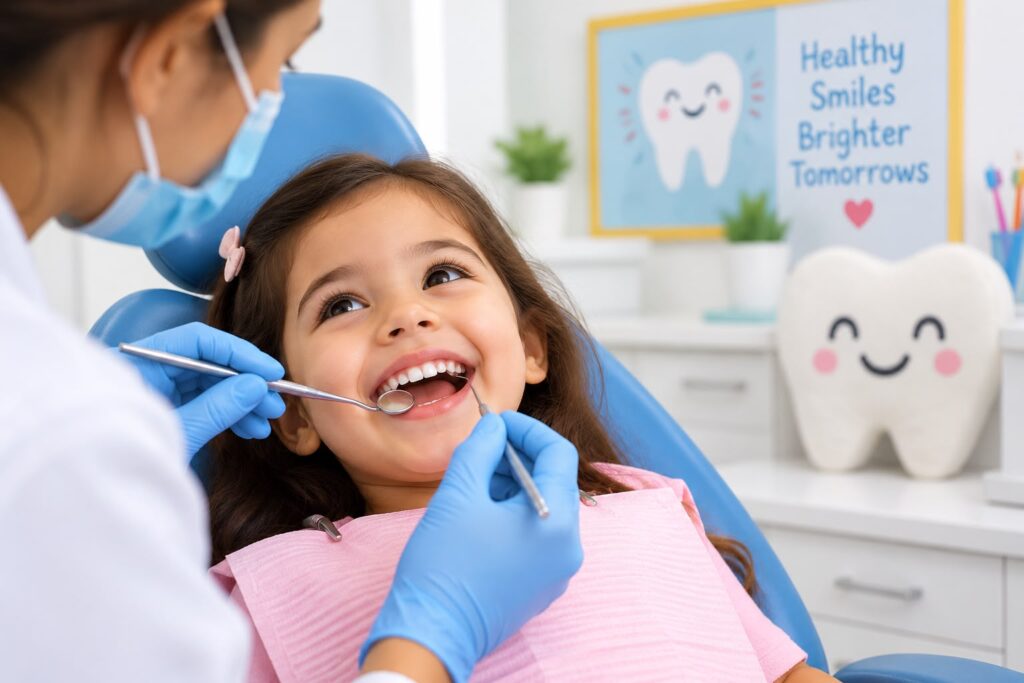
Pediatric Dentistry: Complete Guide to Dental Care for Children
A child’s dental health begins long before their permanent teeth appear. Healthy baby teeth help children eat, speak, smile, and develop properly. They also play an important role in maintaining space for permanent teeth.
Pediatric dentistry focuses on preventing dental problems, monitoring oral development, and helping children develop healthy habits from an early age.
At Raju Dental Care Clinic, children can receive age-appropriate dental care in a comfortable and supportive environment, while parents receive practical guidance on brushing, diet, cavity prevention, and maintaining good oral health at home.
What Is Pediatric Dentistry?
Pediatric dentistry is dental care specifically focused on infants, children, and teenagers.
Children’s dental needs change as they grow. From the eruption of their first baby tooth to the development of permanent teeth, regular dental care can help identify and manage problems at the right stage.
Pediatric dental care may include:
Routine dental examinations
Cavity prevention and treatment
Professional dental cleaning
Fluoride applications when appropriate
Dental sealants when recommended
Monitoring tooth and jaw development
Guidance on brushing and flossing
Diet and nutrition advice
Management of dental habits
Preventive dental care for teenagers
When Should a Child First Visit the Dentist?
Parents often wonder when they should take their child for their first dental appointment.
A child’s first dental visit is generally recommended around the time the first tooth appears or by their first birthday.
An early visit allows the dentist to:
Examine the developing teeth and gums
Identify early signs of tooth decay
Guide parents on brushing
Discuss fluoride toothpaste
Provide advice about feeding and diet
Explain habits that can affect dental development
Help the child become comfortable with dental visits
Starting early can make dental care a normal part of a child’s routine rather than something they only experience when they have tooth pain.
Why Are Baby Teeth Important?
Baby teeth are temporary, but that does not mean they should be ignored.
Healthy primary teeth help children:
Chew food properly
Develop clear speech
Maintain space for permanent teeth
Support normal jaw development
Build confidence when smiling and interacting with others
Untreated decay in baby teeth can cause pain and infection and may affect a child’s eating, sleep, and overall comfort.
This is why taking care of baby teeth is an important part of childhood healthcare.
Common Dental Problems in Children
Children can experience several dental problems as they grow.
Tooth Decay
Cavities are one of the most common dental problems in children. Frequent sugary snacks, sweetened drinks, inadequate brushing, and poor oral hygiene can increase the risk.
Gum Problems
Although gum disease is more commonly associated with adults, children can also develop gum inflammation due to plaque buildup and inadequate oral hygiene.
Tooth Sensitivity or Pain
A child who frequently complains of tooth pain or sensitivity should be examined by a dentist.
Dental Injuries
Falls, sports injuries, and accidents can sometimes damage children’s teeth. Dental trauma should be evaluated promptly, particularly when a tooth is broken, displaced, or knocked out.
Oral Habits
Habits such as prolonged thumb sucking or pacifier use may affect dental development in some children. Your dentist can advise parents about when and how to address these habits.
What Happens During a Child’s Dental Visit?
A pediatric dental appointment should be appropriate for the child’s age and comfort level.
A typical visit may involve:
1. Getting Comfortable
The dentist and dental team introduce the child to the clinic and explain what will happen in simple, reassuring language.
2. Dental Examination
The child’s teeth, gums, mouth, and overall oral development are examined.
3. Cleaning
If appropriate, professional cleaning may be performed based on the child’s age and cooperation.
4. Preventive Treatment
Depending on the child’s risk of tooth decay, the dentist may recommend fluoride treatment or dental sealants.
5. Parent Guidance
Parents can receive advice about brushing techniques, fluoride toothpaste, diet, snacks, and other aspects of home dental care.
6. Building Positive Dental Experiences
A calm and encouraging approach can help children become more comfortable with future dental visits.
How Can Parents Prevent Cavities in Children?
Preventing cavities starts with everyday habits at home.
Parents can help by:
Brushing their child’s teeth twice a day.
Using an age-appropriate fluoride toothpaste.
Supervising brushing until the child can brush effectively on their own.
Cleaning between teeth when appropriate.
Limiting frequent sugary snacks.
Avoiding regular consumption of sugary drinks.
Encouraging water as a healthy everyday drink.
Scheduling regular dental examinations.
The goal is not simply to treat cavities after they appear but to reduce the chances of developing them in the first place.
Why Is Fluoride Important for Children?
Fluoride can help strengthen tooth enamel and make teeth more resistant to decay.
The amount and type of fluoride toothpaste or professional fluoride treatment appropriate for a child depends on factors such as age and individual cavity risk.
Parents should use fluoride products according to their dentist’s recommendations.
What Are Dental Sealants?
Dental sealants are protective coatings that can be applied to the grooves and pits of certain teeth, particularly back teeth where food and plaque can become trapped.
Sealants may be recommended for children who have an increased risk of developing cavities in these areas.
Your dentist can determine whether sealants are appropriate for your child.
What If My Child Is Afraid of the Dentist?
Dental anxiety is common among children, especially if they have never visited a dentist before or have had an uncomfortable previous experience.
Parents can help by:
Speaking positively about dental visits.
Avoiding frightening words or descriptions.
Explaining that the dentist helps keep teeth healthy.
Bringing the child for regular visits rather than waiting for pain.
Allowing the dental team to introduce procedures gradually.
Remaining calm and reassuring during the appointment.
A child’s first few dental experiences can influence how they feel about dental care as they grow.
How Often Should Children Visit the Dentist?
The ideal dental visit schedule depends on the child’s age, oral health, cavity risk, and individual needs.
Regular visits allow the dentist to monitor:
Tooth eruption
Dental development
Oral hygiene
Cavity risk
Gum health
Jaw development
Dental habits
Your dentist can recommend a suitable schedule for your child.
Dental Care Tips for Different Ages
Infants and Toddlers
Begin cleaning the mouth and teeth as soon as teeth begin to appear. Parents should supervise oral hygiene and discuss feeding and dental habits with their dentist.
Young Children
Help children develop a consistent brushing routine. Continue supervising brushing until they have the coordination and understanding to clean their teeth effectively.
School-Age Children
Encourage independent brushing while continuing to monitor their technique. Regular dental checkups can help detect cavities and developmental concerns early.
Teenagers
Teenagers should continue regular dental visits and maintain good brushing and interdental cleaning habits. Orthodontic treatment, diet, sports-related injuries, and wisdom teeth may also become relevant during this stage.
When Should You Take Your Child to the Dentist Immediately?
Do not wait for a routine appointment if your child has:
Severe tooth pain
Facial or gum swelling
A dental injury
A broken tooth
A knocked-out permanent tooth
Bleeding that does not stop
Signs of dental infection
Difficulty eating because of dental pain
Prompt professional evaluation can help prevent a dental emergency from becoming more complicated.
Why Choose Raju Dental Care Clinic for Pediatric Dentistry?
Children require a different approach to dental care than adults. A positive environment, age-appropriate communication, preventive care, and parent education can make dental visits easier for both children and parents.
At Raju Dental Care Clinic, pediatric dental care can focus on:
Preventing dental problems
Monitoring growing teeth
Encouraging healthy oral habits
Educating parents about home care
Identifying dental problems early
Creating positive dental experiences for children
The aim is to help children develop habits that support healthy teeth and gums as they grow.
Frequently Asked Questions
When should my child have their first dental visit?
It is generally recommended that children see a dentist around the time their first tooth appears or by their first birthday.
What if my child is scared of the dentist?
Dental fear is common. A calm, child-friendly approach and regular visits from an early age can help children become more comfortable with dental care.
Do baby teeth really need treatment?
Yes. Baby teeth are important for chewing, speech, comfort, and maintaining space for permanent teeth. Untreated decay can cause pain and infection.
How can I prevent cavities in my child?
Help your child brush twice daily with age-appropriate fluoride toothpaste, limit frequent sugary snacks and drinks, encourage healthy eating habits, and maintain regular dental checkups.
Should parents help children brush their teeth?
Yes. Young children often do not have the coordination to clean their teeth thoroughly. Parents should supervise and assist with brushing until the child can do it effectively.
Are dental sealants safe for children?
Dental sealants are commonly used as a preventive measure for children at risk of cavities in the grooves of their back teeth. Your dentist can determine whether they are appropriate for your child.
What should I do if my child’s tooth gets knocked out?
Dental injuries should be evaluated promptly. If a permanent tooth is knocked out, seek urgent dental care and handle the tooth carefully without touching the root.
Give Your Child a Healthy Start to Dental Care
Good dental habits developed during childhood can continue into adulthood. Regular dental examinations, proper brushing, a balanced diet, and preventive care can help children maintain healthier teeth and gums as they grow.
If your child needs a dental checkup, cavity prevention, treatment for tooth pain, or guidance about their oral development, Raju Dental Care Clinic can help you understand the appropriate next steps.
Book a pediatric dental consultation and give your child’s smile the care it deserves.